A headline is not the whole story. It is the doorway into the story.
Headlines can help children notice important information, but they can also make something feel bigger, scarier or more certain than it really is.
Children see headlines everywhere: on videos, search results, social posts, adverts, news stories and AI summaries.
A headline can help them understand what something is about, but it can also shape what they notice, feel and believe before they know the full story.
A good headline can be useful. It can point to something important, summarise a story or help a child decide whether they want to learn more.
But some headlines are written to grab attention first. They may leave out context, use emotional words, sound more certain than the facts, or make the reader feel rushed into reacting.
Help your child spot persuasive words online
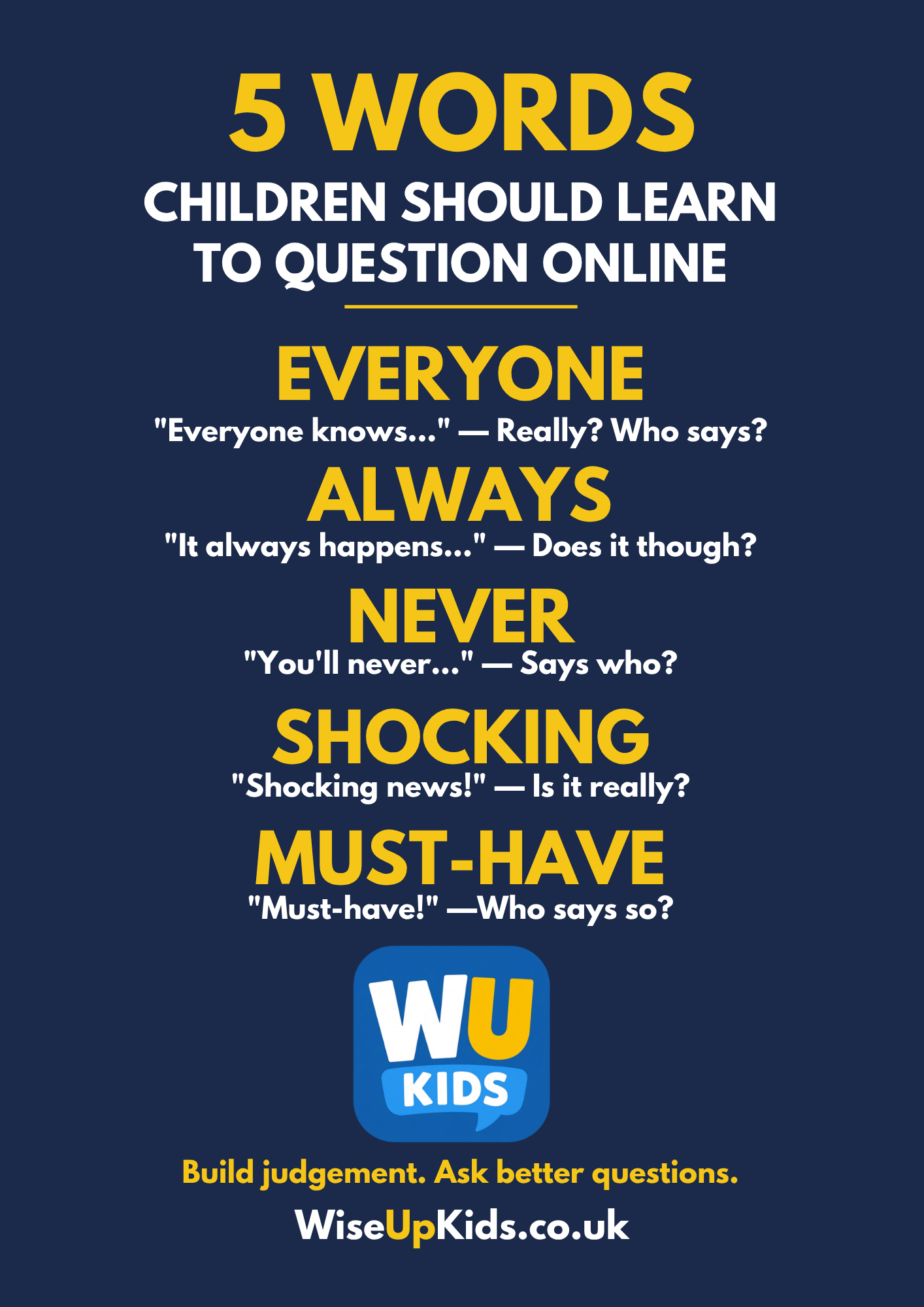
Download our free
5 Words Children Should Learn To Question Online poster
and use it as a simple reminder at home, school or anywhere children are learning to pause before they believe, click or react.
Why headlines are powerful
Headlines are designed to be noticed quickly. Children may see them while scrolling, searching, watching videos or looking over someone else’s screen.
That means the headline may arrive before the facts, before the context and before the child has had time to think.
This matters because first impressions can be sticky. If a headline makes something feel shocking, dangerous, unfair or urgent, a child may carry that feeling into the rest of the story.
A headline is not the whole story
The headline
Short. Fast. Designed to get attention. It may show one angle, one feeling or one dramatic part of the story.
The full story
Slower. More detailed. It may include evidence, context, uncertainty, different views and information the headline left out.
Children do not need to distrust every headline. They need to understand that a headline is a starting point, not the final answer.
Five headline questions children can ask
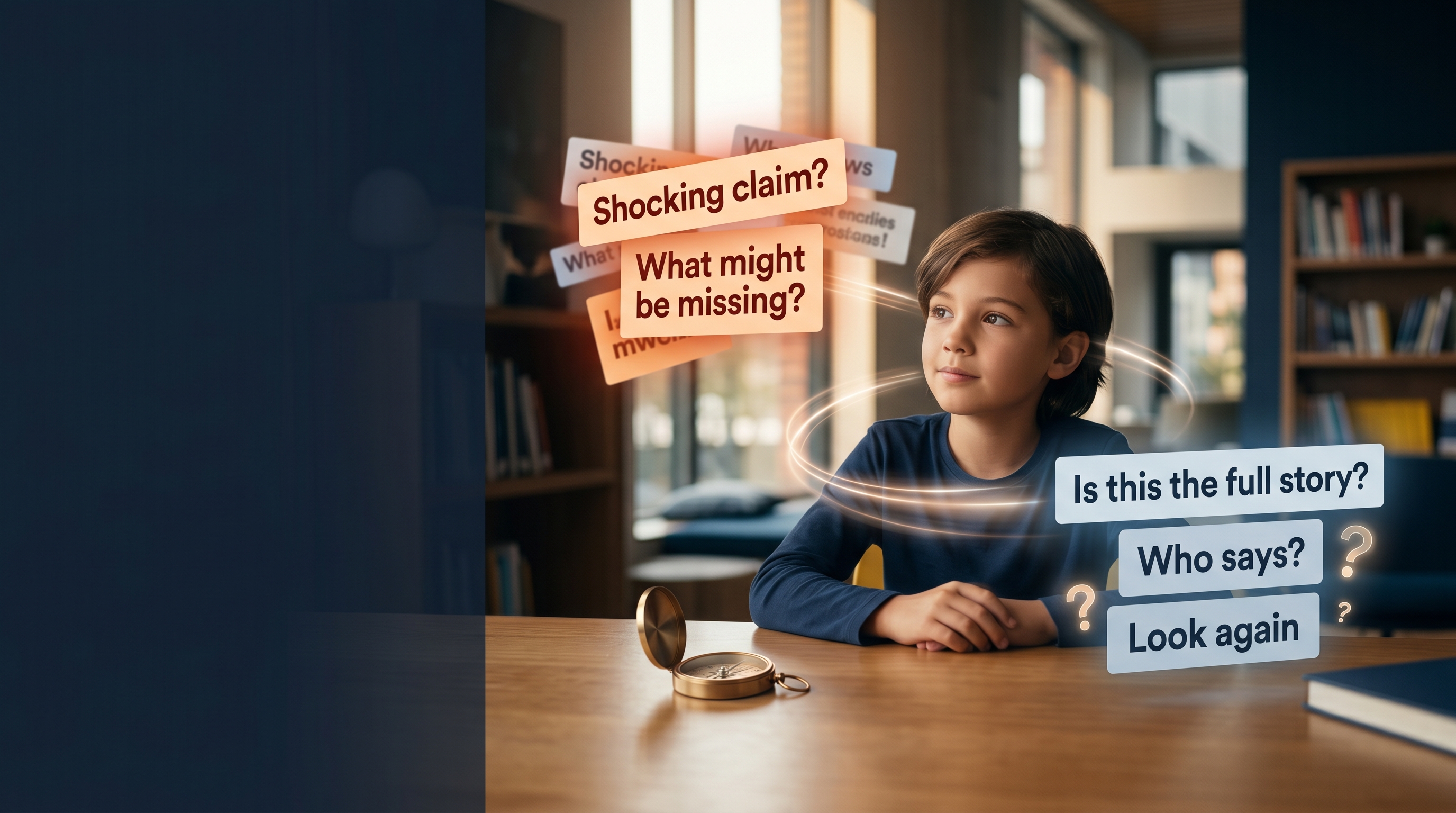
Is this the full story?
What might be missing?
Who created this?
How does this want me to feel?
What would I know if I read beyond the headline?
1. Is this the full story?
A headline has very little space. It cannot include every detail, every exception or every piece of context.
That does not always mean it is wrong. It means it is incomplete.
A useful family phrase is: the headline tells us where to look, not what to believe.
2. What might be missing?
Some headlines focus on the most dramatic part of a story. Others leave out the reason something happened, who was involved, how reliable the claim is, or whether there is another side.
Teaching children to ask what might be missing? helps them slow down and look for context before forming a strong opinion.
3. Who created this?
A headline from a trusted news organisation, a company, a social media account, an influencer, an advert or an anonymous page may all need to be read differently.
Children can learn that the source matters. Before they believe the message, they can look at the messenger.
4. How does this want me to feel?
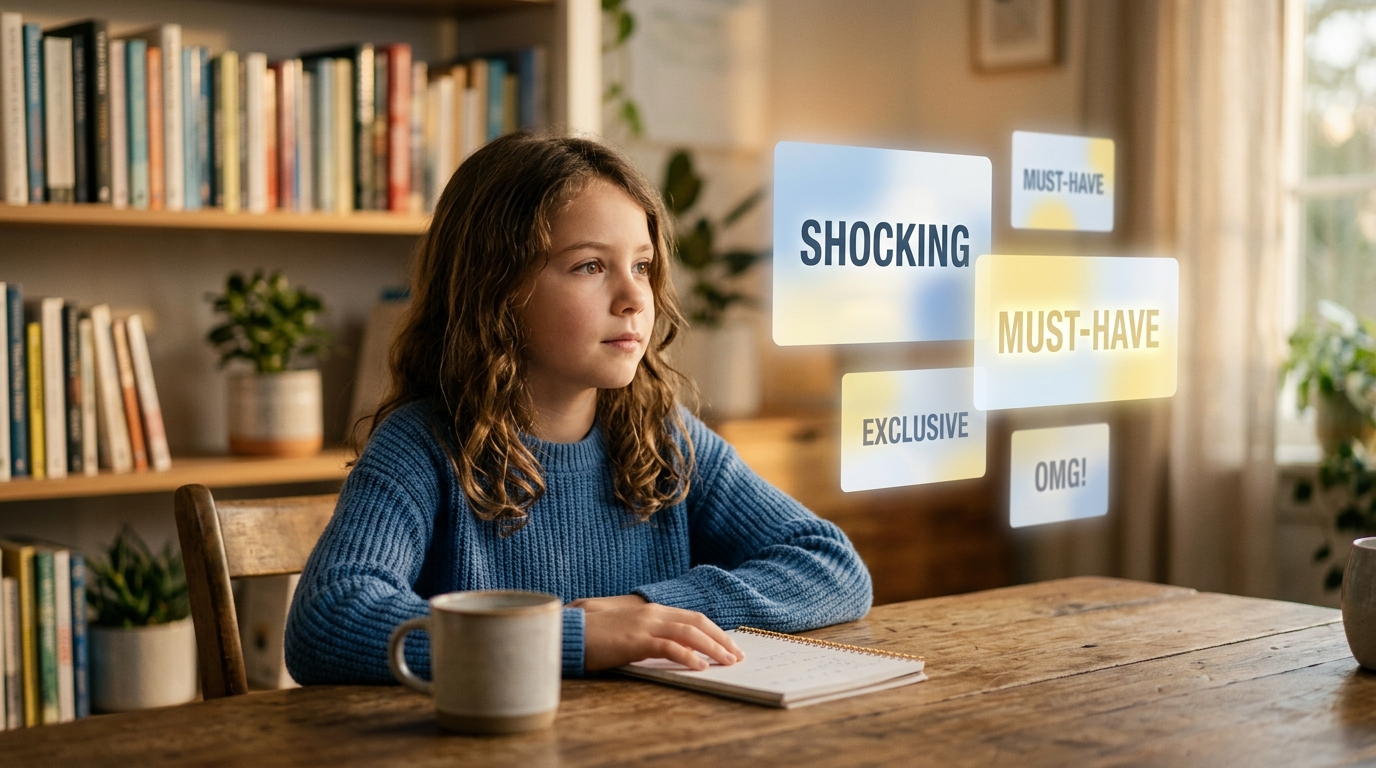
Some headlines use emotional language because emotion gets attention. Words such as shocking, terrifying, exposed, must-see, unbelievable or everyone knows can make a child feel before they think.
Once a child can name the feeling, they are less likely to be pulled around by it.
5. What would I know if I read beyond the headline?
This is where judgement grows. Children can learn that reading beyond the headline may reveal facts, uncertainty, missing details, dates, sources, evidence or another side of the story.
The goal is not to make children suspicious of everything. The goal is to help them become curious enough to look again.
Headline words worth pausing on
Everyone
Always
Never
Shocking
Must-have, must-see or must-know
What parents can say
“That headline sounds strong. What do we know so far?”
“What might we find out if we read the full story?”
“Is this trying to inform us, or get a reaction from us?”
“What feeling does this headline create?”
Headlines can shape what children notice first.
Better questions help them look again before they believe, share or react.
Sources & Further Reading
This article should be read alongside current guidance and resources from trusted advertising, literacy and news-literacy organisations:
ASA/CAP – Misleading advertising rules
News Literacy Project – Checkology resources
Education Endowment Foundation – Improving Literacy in Key Stage 2
Ofcom – Media literacy research and resources
Get Curious
Continue the conversation with these related articles.
What Are Big Words Designed To Do?
Help children understand how powerful words can shape what they feel, believe and do.

The Five Questions Every Child Should Ask Online
A simple framework to help children pause, question and think before believing what they see online.
How Algorithms Shape What Children See Online
Help children understand why online feeds do not show everything equally — and why that matters.