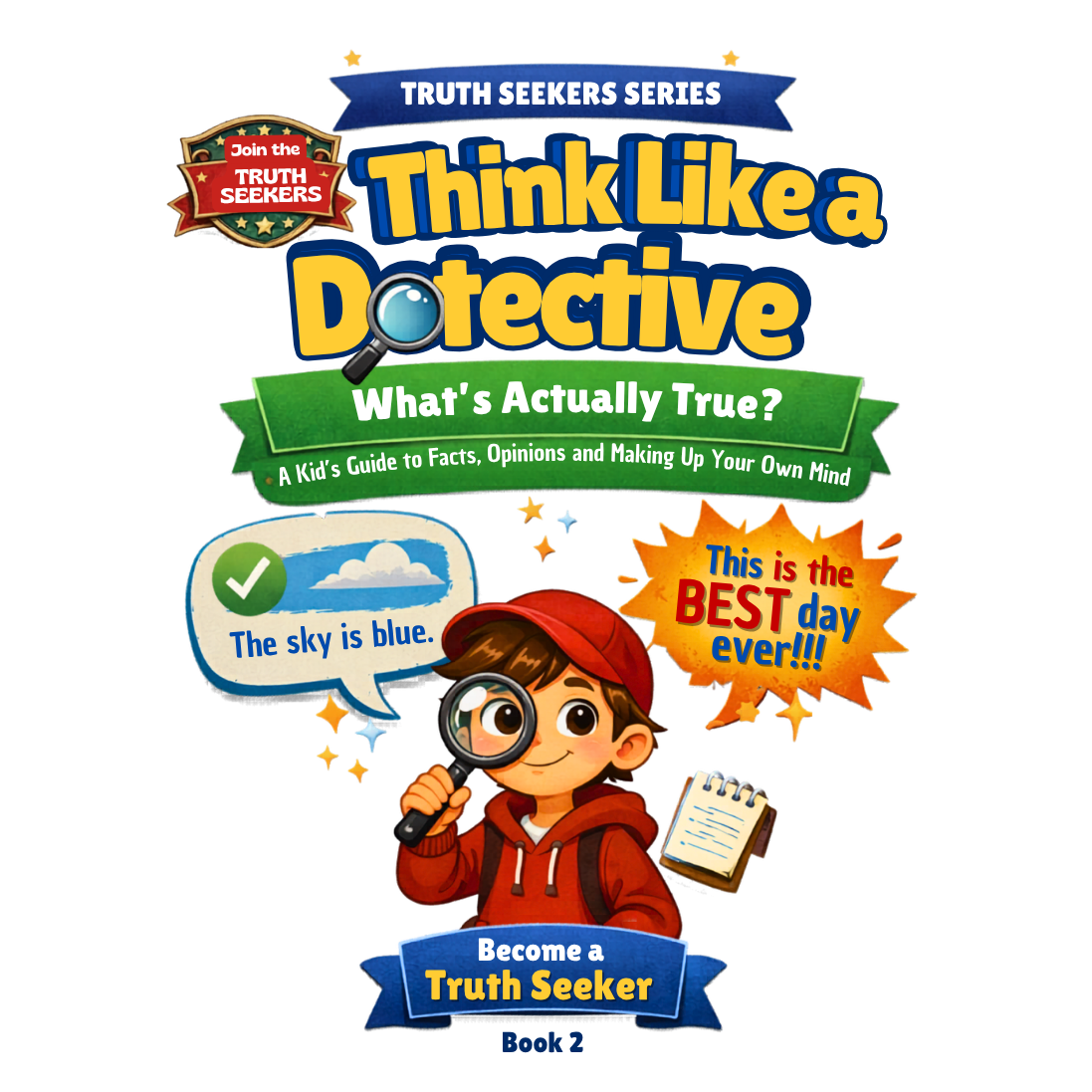
Children don’t just need more rules online. They need better questions.
In a world full of opinions, algorithms, influencers and AI answers, good judgement starts with learning what to ask.
Children are growing up in a world full of opinions, algorithms, influencers, AI answers and persuasive content.
They do not just need more rules. They need an internal compass that helps them pause, question and think before
they believe, share or react.
The internet gives children access to more information than any generation before them. Some of it is helpful.
Some of it is entertaining. Some of it is misleading, incomplete, exaggerated or designed to provoke a reaction.
That is why one of the most important online safety skills is not simply knowing what to avoid. It is knowing
what to ask.
Why questions matter more than quick answers
Children often meet information quickly: a video, a headline, a comment, an AI response, a meme or a post from
someone they follow. The faster something appears, the easier it is to accept without thinking.
Good questions create a pause. They help children slow down long enough to notice what is being shown to them,
who created it, why it exists and how it is trying to make them feel.
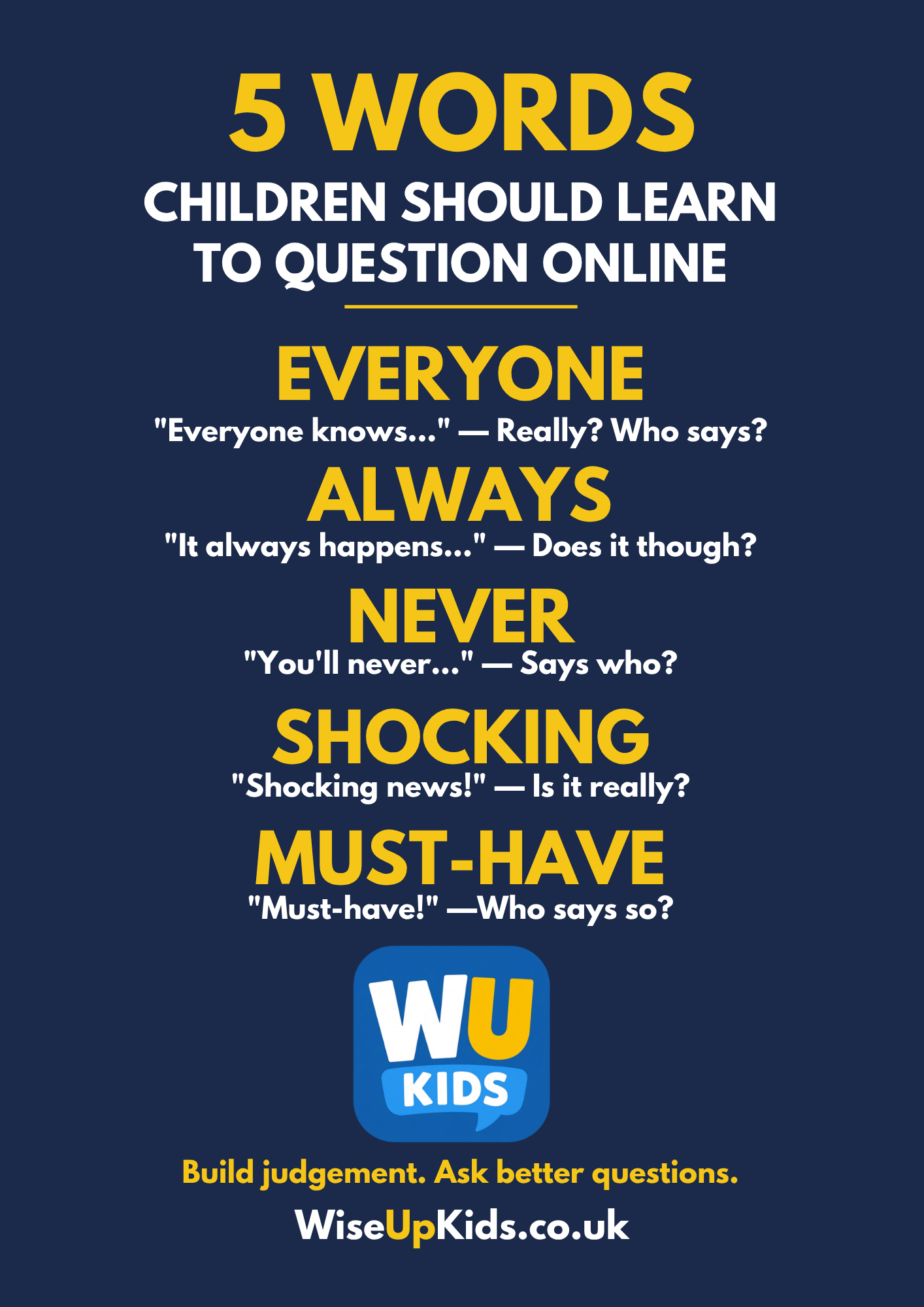
Help your child spot persuasive words online
Download our free
5 Words Children Should Learn To Question Online poster
and use it as a simple reminder at home, school or anywhere children are learning to pause before they believe, click or react.

The Five Questions
Who created this?
Why was it made?
What evidence is there?
What might be missing?
How does this want me to feel?
1. Who created this?
The first question is simple: who made this? Was it a journalist, a teacher, a company, an influencer,
an anonymous account, a friend, an AI tool or someone trying to sell something?
Children do not need to distrust everyone, but they do need to understand that the source matters.
A useful family phrase is: before we believe the message, let’s look at the messenger.
2. Why was it made?
Not everything online is created to inform. Some content is made to entertain, sell, persuade, provoke,
gain attention or collect clicks.
Children can begin to ask whether something is trying to teach them, scare them, make them angry,
make them laugh or make them share.
3. What evidence is there?
If something makes a claim, children can learn to ask what backs it up. Is there a source? Is there proof?
Is it just someone’s opinion?
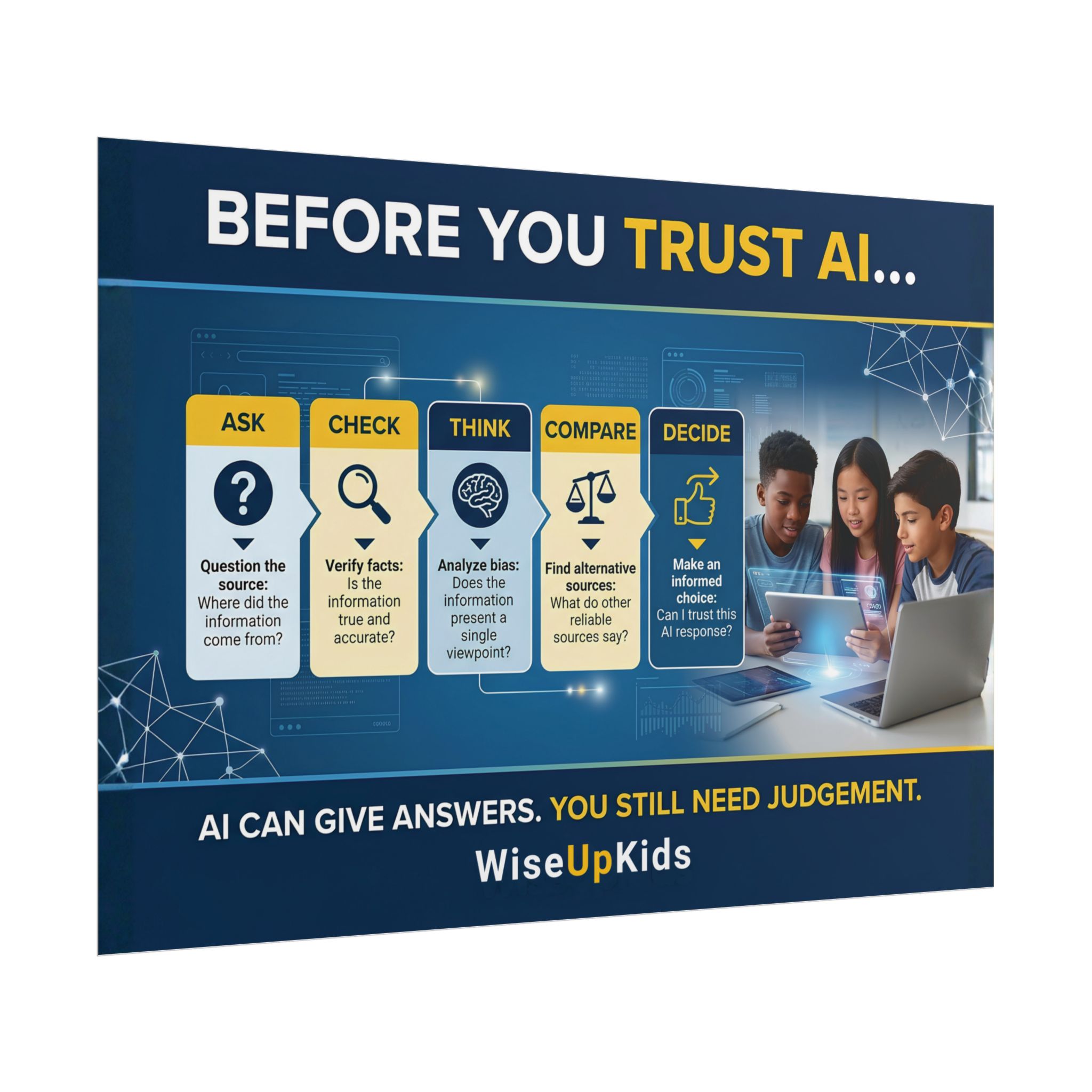
This is especially important with AI tools, search results and social media posts, because confident answers
are not always correct answers.
4. What might be missing?
This may be the most powerful question of all. Online content often shows one angle, one clip, one opinion
or one side of a story.
Asking what might be missing? helps children consider context, another side, extra facts
or a different explanation.
5. How does this want me to feel?
A lot of online content is designed to create emotion. Anger, fear, excitement, envy, outrage and urgency
can all make people react before they think.
Once children can name the feeling, they are less likely to be controlled by it.
Children will not always have a trusted adult beside them when they see something confusing, persuasive or
misleading online.
That is why they need the confidence to pause, question and think.
Sources & Further Reading
This article should be read alongside current guidance from trusted child-safety, media-literacy and education organisations:
Ofcom – children’s media use and AI trust findings
GOV.UK – Growing up in the online world consultation
OECD – artificial intelligence, education and skills
AI Literacy Framework
NSPCC – AI safety tips for parents
Get Curious
Continue the conversation with these related articles.

What Age Should Children Get Social Media?
Social media readiness is not just about age. It is about judgement, pressure, privacy and whether a child knows when to ask for help..

Can AI Get Things Wrong?
Why chatbots sometimes make mistakes and why checking information still matters.

Will AI Replace Thinking?
AI can give answers, but children still need judgement, curiosity and independent thinking.