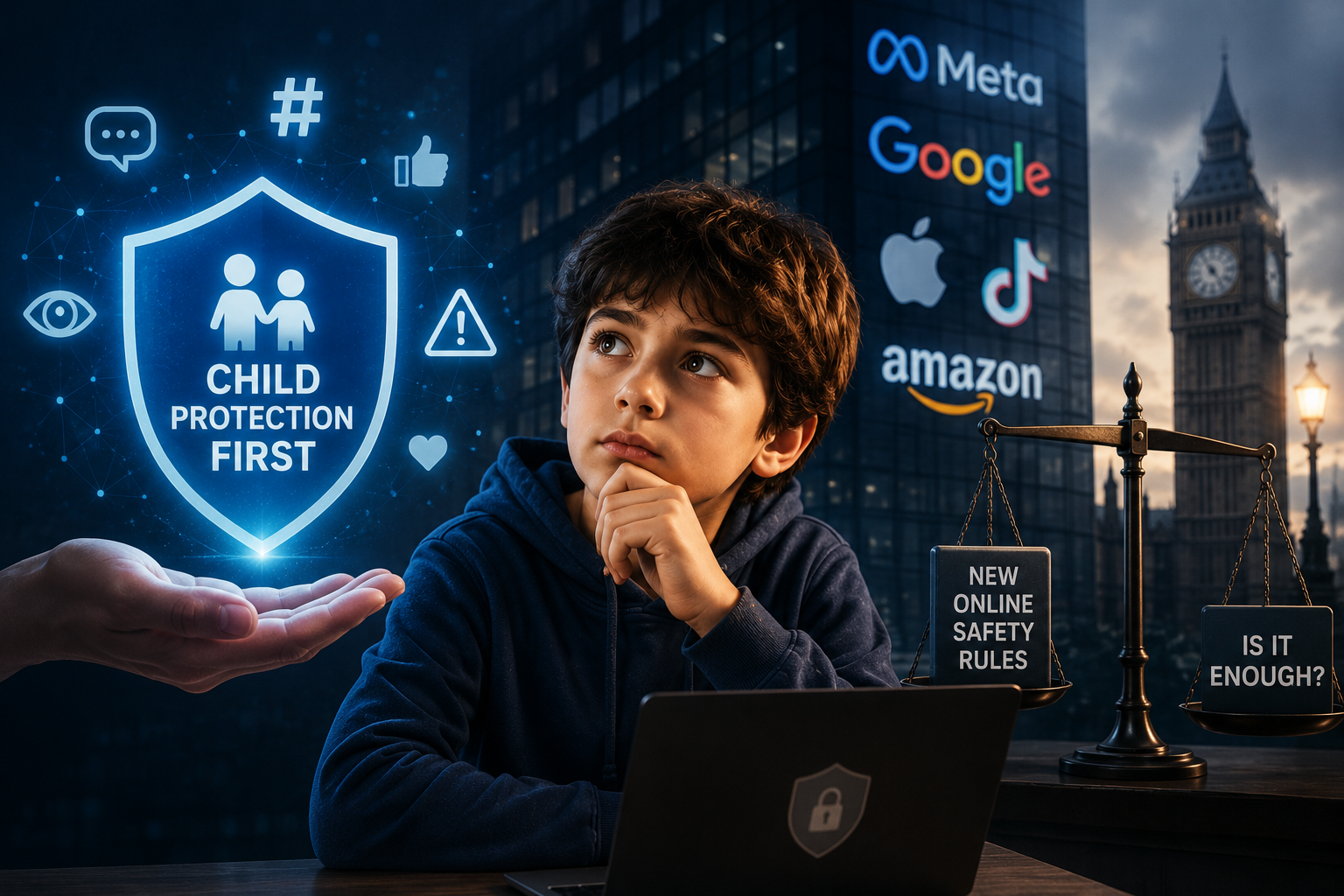
Social media could be banned for under-16s. But can rules ever replace judgement?
The goal isn’t simply keeping children away from the digital world. It’s helping them develop the judgement to navigate it when adults are not there.
The UK government has announced plans that could ban under-16s from major social media platforms, including apps such as TikTok, Instagram, Snapchat, Facebook, X and YouTube.
For many parents, the announcement may feel like a relief. Social media can expose children to harmful content, addictive design, stranger contact, unrealistic comparison, misinformation and pressure they are not always emotionally ready to manage.
Rules can help. Age limits can help. Platform responsibility matters. But there are still questions families, schools and policymakers cannot avoid.
What happens when a child finds a way around the rules?
What happens when no one is watching?
What happens when they turn 16?
Technology Helps
Rules, filters, safety settings and age restrictions all have a role to play. They can reduce risk, slow things down and give families more support.
Judgement Matters
But eventually, every child reaches a moment where they must make a decision without a parent, teacher, app, law or safety setting standing beside them.
That’s why online safety can’t begin and end with technology. Children also need judgement. They need to recognise influence, feel confident asking questions, and understand that not everything online is healthy, helpful or true.
They also need to understand why rules exist. Done well, the goal is not children who obey only because adults are watching. The goal is children who can make better decisions because they understand why those decisions matter.
Technology can help. Rules can help. Governments can help. But the most powerful protection a child can develop is an internal compass.
That internal compass does not appear overnight. It is built through conversation, practice and repeated chances to ask better questions before the stakes become higher.
Questions Every Child Should Learn To Ask
Who is trying to influence me?
Why am I being shown this?
How do I know it’s true?
What might I be missing?
Should I pause and talk to a trusted adult?
Those aren’t just online safety skills. They’re life skills. The same principle applies beyond social media: bullying, peer pressure, gaming chats, AI-generated answers, influencers, rumours and group behaviour all create moments where children may need to rely on their own emotional maturity and internal compass.
Parents cannot monitor every message, every conversation or every screen. Schools cannot supervise every interaction. Governments cannot regulate every future technology before it appears. But families can help children practise the habit of pausing, questioning and thinking clearly.
Because one day, the strongest protection won’t be a setting on a device.
It will be the judgement they carry with them.